It is hard to believe that three months have passed. Embarking on the sabbatical was a bit of the unknown, what will this look like and feel like? And now, after three months, it’s hard to believe the time is completed.
Rob and I are so thankful for the time to rest, refresh, renew and have a bit of adventure and we do not take for granted all of your prayers support, the gift of your time and talent that allowed ministry to continue to happen and grow at St John’s so that we could step away.
We know that everyone does not get this opportunity and we are grateful for your generousity and the Lilly Foundation’s support and legacy that helped to make our sabbatical time possible.
In Yoga there is a series of poses called Vinyasa. Also called sun salutation, this movement is done after holding a pose and it resets the body so that you can stretch into the next pose. While i was getting back into the swing of my yoga class, i realized this is exactly what a sabbatical does, it resets your mind body and soul so that one can move into the next pose and stretch more deeply and fully into the space.
I am excited to return to St. John’s on July 15 to stretch more deeply with ya’ll as we continue to “work in the vineyard.”
Right now i have settled into learning 3,000 new names, resolutions, and things about the Episcopal church as we settle into General Convention!
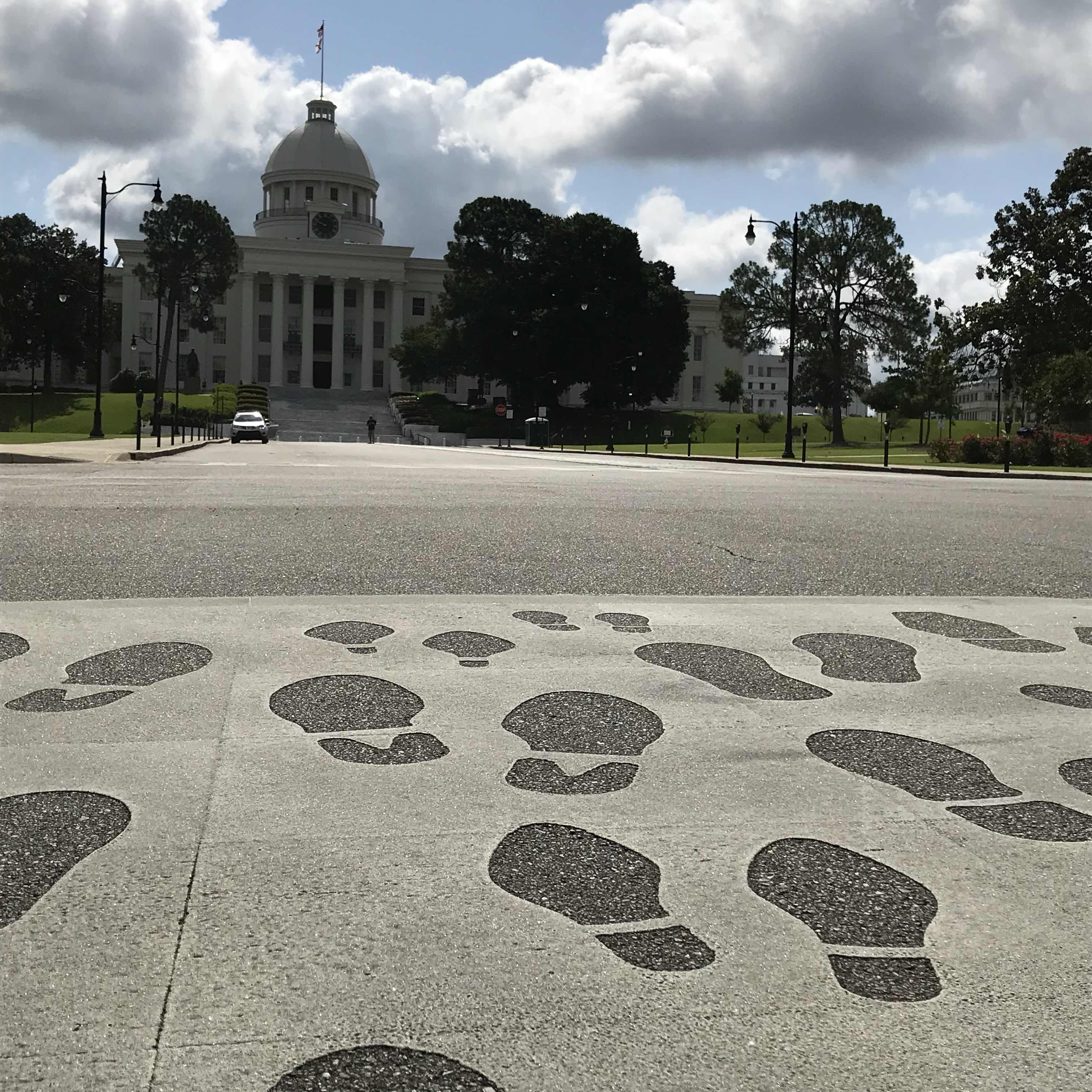
In January of this year I had the chance to attend a gathering of associate rectors in Montgomery, Alabama. Having never visited Montgomery before and excited to gather with my colleagues, I drove the four hours north and west of here. And then it snowed. Yes, snow in Montgomery. They were as surprised as we were. Needless to say, we had our meetings but our historical tour was cut short because Montgomery wisely shut everything down out for safety (no snow plows or salt trucks, did i say they don’t get snow?)
So, the final travels of my sabbatical were to go to Montgomery to do the historical thing, visit the museums, listen to the story, follow the civil rights trail that occurs on the same historic spaces of the civil war,, and also visit the living museums recently added. It seemed a good bookend to a sabbatical that began with a visit to the Loraine Hotel in Memphis and the Civil Rights Museum in Atlanta. I also just recently finished reading the book “The Pride and the Promise” tracing Tallahassee’s own history of civil rights and struggles with integration.
The daily prayer i have incorporated into my prayers that comes from Coventry goes as follows: “Today I commit to learning from history, from those who are different from me and from those whom i find it difficult to love”...... Rob and I set off to Montgomery to listen and follow.
The weekend we went included the Pride Parade in Montgomery, a Juneteenth celebration, and scorching heat (probably not surprising about the weather). We visited the Dexter Ave Baptist Church (where MLK Jr was pastor, you can stand at his pulpit, sit in his office chair), the Freedom Riders museum (did you know the freedom riders came through Tallahassee too?), The Civil Rights Museum by SPLC, the Rosa Parks Museum, The Legacy Museum and the National Memorial for Justice and Peace. Lots of reading, walking, and learning. We then hopped in the car and drove to Selma, and heard the story of Bloody Sunday, Turnback Tuesday and the 54 mile march from Selma to Montgomery to demand voting rights for all.
The day was full, hot, and gave us lots of to absorb. The piece that was most moving to me were the people who told their stories, invited us in to hear their accounts. Wanda, who led our tour at Dexter Ave. Church, shared the history and story of MLK Jr. And, while we were late to the gathering in Selma, there were heard the first hand account of a woman who marched in Selma on all three days when she was 11 years old. Both women told their stories with their passion and hope, engaging the listener, informing the listener and inviting us to walk alongside of them.
As the end of my sabbatical approaches, I have been reading A LOT. In the most recent books, the themes seem to come back to this, we need to deeply listen to each other. DEEPLY listen. Even in sabbatical i am realizing this is so difficult in a world where we are Called to go, go, go, and do, do, do. The second theme is that we need to deeply listen and also tell our own story. We are story tellers, we need to risk and tell our story, being vulnerable to others and share our story.
At camp, many summers ago, the theme of the week was God’s Story, Our Story, My Story- we are a part of all three. How well do we know God’s Story, our own story as a community, and our own personal story. How do we share this story? How do we invite others to walk alongside of our story.
Each of us is a valuable child of God, created uniquely and loved deeply. We don’t always believe it or know it. We don’t always show that to our neighbors, and yet God always shows that love to us.
As my sabbatical comes to a close soon, i am thankful for this time to listen more deeply, to learn more of my story and be reminded of God’s story for each of us and all of us as a community.
One of the components of my sabbatical proposal was not just learning about Social Justice in Iona and Reconcilation in Coventry with a wonderful hike thrown in the middle of it all. While we can learn from other communities, we also have to know our own history, which brings me to the most recent segment of my sabbatical- a trip to North Georgia where my parents, sister and her family, and younger brother live. I went to learn the family recipes that are a part of my story (regardless of how well I know that story!)
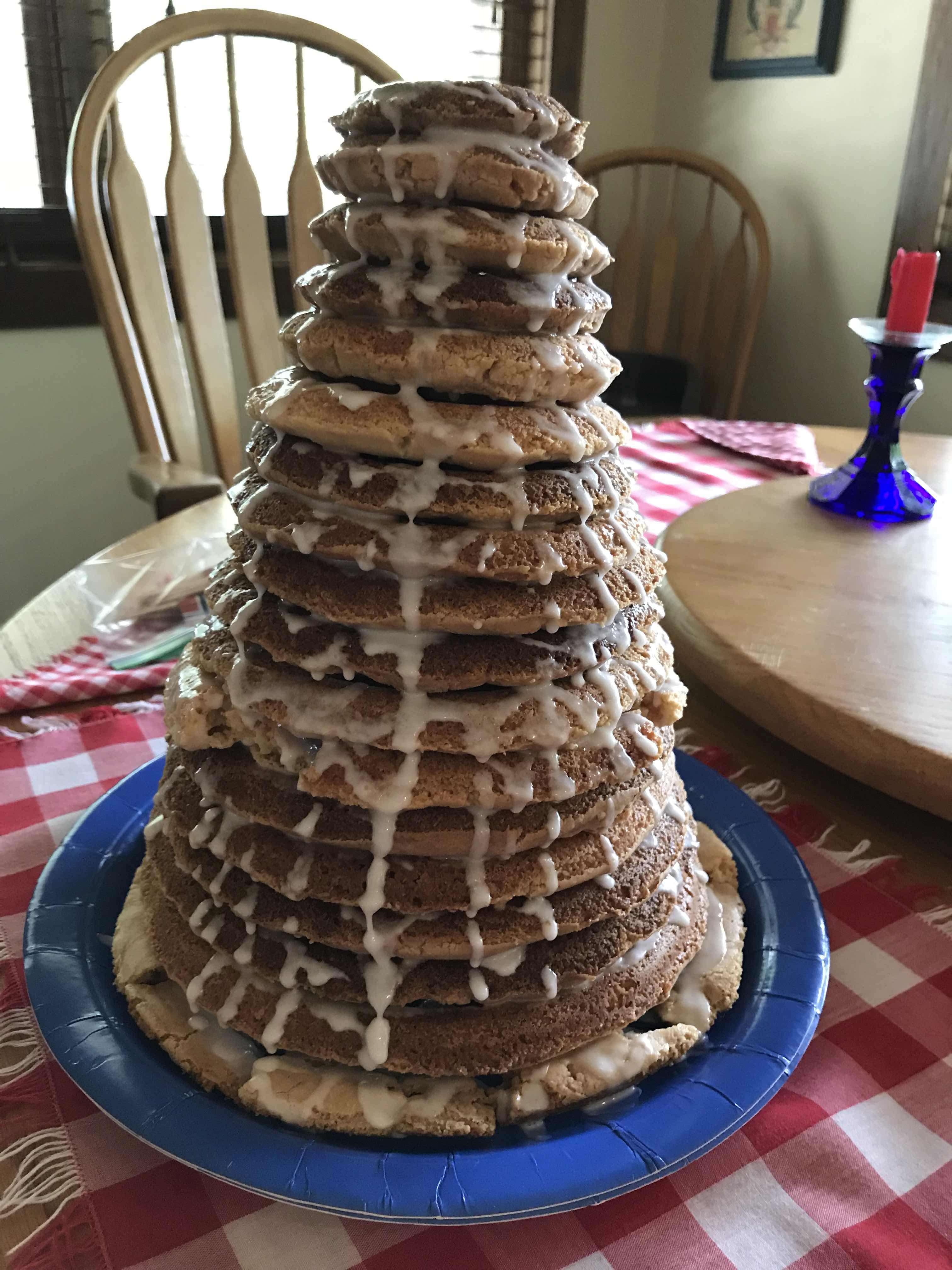
I arrived to the beauty of the hills and my mother had all the right gadgets, recipes and ingredients to go to make Norwegian Krumkake, KranzeKake (kake means cake), and rosettes, along with the fixings for spaetzle and schnitzel, sauerkraut and meatballs.... we ate well the whole week and my younger brother took the time to hike the trails of Amicalola Falls, Len Foote Inn, and Blood Mountain. For those of you familiar with the area, this means intense inclines at the beginning of each hike, a good cleansing sweat was brought forth each morning and burning all those calories before we indulged in yummy home cooking!
As we sat together and gathered around the dinner table, much like when i was growing up, with no devices, no tv, I realized that going home is much like the movie a Christmas Carol- all at once.
Christmas Past, eating familiar foods and cooking with the dishes that mom still has, from the yellow Tupperware colander to the brown pancake batter bowl (great for all batters). The dishwasher is still loaded a certain way and certain dishes are never put in the dishwasher. There is always an abundance in the house, never a hungry soul.
Christmas Present, while some things stayed the same, there we sat around the table in our various stages of life: me in sabbatical, mom and dad in retirement, my sister with her family, my brother in between semesters of graduate school..becoming who we are still.
Christmas Future, we catch a glimpse of ourselves in our parents sitting at the table- genetically our future health (potentially), where we could be depending on our investments, choices, etc.......and we can dream about seeing the joys they see where they are in their stage of life.
And then we descend back down the mountain (literally for me as i drove from the mountains of North Georgia to FL) catching snapshots along the way of where the journey will take us.
I am heading into the final weeks of my sabbatical before I go to General Convention in Austin TX, July 3- 14. I am in the midst of cooking some final recipes and reading up on Tallahassee history (a bit of our past as we dream about shaping our future) and savoring this time. I am so thankful to all who have made this time possible for me and for St John’s.
The Emery House property consists of multiple buildings:
a 15-room main house begun in 1720, six small hermitages, and two small 10×10
cabins in the forest used by retreatants in the summer. The property was given
to the Society of St. John the Evangelist by the Emery family.
The Brothers living at Emery House are pleased to offer
hospitality, meals, and occasional spiritual direction for those on individual
and group retreats.
Guests are also invited to join in the Brothers’ daily
worship (Morning Prayer, Holy Eucharist, Evening Prayer, and Compline), which
follows The Book of Common Prayer of the Episcopal Church.
Each physical meal was what one would call “hearty” or
straight from the earth. Breakfast was cereal or granola, Lunchdelicious hot dishes and for dinner soup and
salad with bread.
On my first night there we had a delightful soup of Carrot
Soup. It was divine. The recipe is shared below.
Upon return I realized how much we eat that is packaged
and not straight from the earth or even a recent kitchen. Simple meals often
are swapped out for quick meals and I realized how much I missed eating a
variety of vegetables much more than potatoes! Oh the beets and mushrooms and
eggplant! Eat those veggies!
CREAMY THAI CARROT
SOUP WITH BASIL
Thai-inspired, 8
ingredient, 30-minute carrot soup that’s creamy, vegan + gluten free, perfectly
sweet and spicy and so delicious.
·1/3 cup creamy or crunchy salted natural peanut
butter (use less for a less intense PB flavor)
·2 tsp chili garlic sauce (use less for less
spice)
·OPTIONAL TOPPINGS: Fresh basil, cilantro, or
mint; coconut milk; brown sugar or agave nectar (sub honey if not vegan);
Sriracha hot sauce (NOT LISTED: Coconut or Olive Oil for sautéing)
Instructions
1. Heat a large pot over medium heat.
2. Dice onion and garlic. Add to pot with 1 Tbsp coconut or
olive oil (or nonstick spray). Add carrots and cook for 5 minutes.
3. Season with a healthy pinch each salt and pepper, then
add veggie stock and 2 cups of water and stir.
4. Bring to a low boil, then reduce heat to a simmer. Cover
and cook for 20 minutes, or until veggies are tender (test by cutting a larger
piece of carrot in half – it should cut with ease).
5. Transfer to a blender (or use an immersion blender) and
blend until smooth and creamy. (Cover with a towel in case your lid leaks any
soup while blending.)
6. Add peanut butter and chili garlic sauce to the blender
and blend to combine, using a ‘puree’ or ‘liquify’ setting if you have it.
7. Taste and adjust seasonings as needed. For a touch of
added sweetness, add a Tbsp or so of brown sugar, maple syrup or agave nectar
(or honey if not vegan). Add more chili garlic sauce for more heat.
My Favorite Go- To Recipes
We all have comfort foods don’t we?
I love making a good brownie. Originally I only made
cookies and thought good golly brownies- you make them and then have to wait
for them to cool, then cool some more and then you can actually cut them…who
has time for that? Those who are patient and plan ahead is who! My favorite
recipe is a dark chocolate version of Martha Stewart’s fudgey brownie recipe, I
originally found it in Everyday Food magazine and it has become my go-to for
brownies! Enjoy
Triple
Dark Chocolate Brownies (adapted from Martha Stewart)
·1
stick of butter
·¾
cups of Chocolate Chips (use dark ones! And I throw ¾ of a bag in, save the
remainder for last step)
·3
eggs
·1
¼ Cup of Sugar
·1
tsp Vanilla
·1
cup of Flour
·¼
Cocoa Powder (dark also!)
·¼tsp
Baking Powder
·¼
tsp Salt
Instructions:
1.Preheat the oven to 350
2.Line a 8x8 inch dish with parchment
paper and spray it with non stick spray (easy clean up!)
3.Melt the butter and ¾ bag of chips
together over a low flame.
4.Transfer the melted chocolaty
goodness to a bowl and add the sugar then eggs.
5.Add the vanilla
6.Add the Flower, Cocoa Powder, Baking
powder and salt. Mix till it just comes together
7.Add the remaining chocolate chips
(if you have not already eaten them all)
8.Do not overmix.
9.Pour into the 8x8 pan and then cook
at 350 for 50-60 minutes. Or knife comes clean when you test it.
10.Let
cool for 10-20 min in pan, then remove from pan, let cool for another hour
before even attempting to cut them or else you will have a MESS!
When I gave up eating grains recently I realized that
baking is first not supposed to happen and second not really tasty. FINALLY I
found a recipe that did not add TOO much sugar and included flax seed, so the
muffin is packed with protein and goodness. Running Paleo Mama is a great
resource for similar recipes.
Paleo
Almond Butter Banana Muffins with Flaxseed
These grain free
and paleo almond butter banana muffins will become a family favorite for
breakfast and snacks! Made with almond flour and flaxseed, these are healthy,
kid friendly and perfect for your favorite mix-ins. Course Breakfast/Snack
Cuisine Paleo
·Prep Time 10 minutes
·Cook Time 20 minutes
·Total Time 30 minutes
·Servings 12 muffins
·Calories 209 kcal Author Michele
Ingredients
·3 eggs
·2 overripe medium bananas
·1/2 cup smooth almond butter
·1/4 cup raw honey
·1 tsp pure vanilla extract
·1 1/4 cups blanched almond flour
·1/3 cup flaxseed meal
·1 tsp baking soda
·generous pinch salt
·Mini dairy free Chocolate chips (optional)
Instructions
1. Preheat your
oven to 350 degrees and lightly grease a 12 cup muffin pan with coconut oil or
line with muffin liners.
2. In a large bowl,
whisk together the eggs with the mashed bananas, almond butter, honey, and
vanilla extract. In a separate bowl, combine the almond flour, flax, baking
soda and pinch of salt.
3. Stir the dry
ingredients into the wet mixture until just combined, don't over-mix. If adding
chocolate chips, raisins or chopped nuts, gently stir in about 1/3 -1/2 cup.
4. Spoon the batter
evenly among the muffin cups/liners to fill about 3/4 of the way (I made 12),
scraping the bowl to use it up. Bake in the preheated oven for 20 minutes or
until edges begin to brown and centers are just set.
5. Cool in the muffin pan for about 2 minutes,
then gently transfer to wire racks to fully cool. Enjoy!
And finally, when I was first learning to cook I saw this
Chipotle Sweet potato soup, I believe also a Martha Stewart recipe and found
the following also and blended the two, and ever since I make it when a soup is
needed. It’s simple recipe and you can kick it up a notch with more chipotle
(or less if you have a milder preference)
Spicy
Sweet Potato Soup
prep 10 minscook 30 minsinactive 10 minstotal 50
mins
author salt & lavender
yield 4+
This spicy
chipotle sweet potato soup is a healthy and flavorful vegan soup with
a nice kick of heat! It's wonderfully silky and will really warm you up this
fall.
Ingredients
1 tablespoon olive oil
4 medium sweet potatoes, peeled and cut into
1/2" pieces (2 lbs)
1medium onion, chopped
2 cloves garlic, minced
7 cups vegetable broth
2 tsp cumin
1 chipotle chili pepper + 1
tablespoon adobo sauce
1 heaped tablespoon tomato
paste
Salt & pepper, to
taste
Instructions
Prep your sweet potatoes and
onion.
Add the oil to a pot on
medium-high heat. Sauté the onion for 5-7 minutes or until it's lightly
browned.
Stir in the garlic and cook
for about 30 seconds or until fragrant.
Add the vegetable broth,
water, chipotle chili pepper + adobo sauce, tomato paste, and sweet
potatoes. Increase the heat to high and bring to a boil. Reduce heat to
medium and cover with the lid slightly ajar for 15 minutes or until the
sweet potatoes are very tender.
Blend the soup in batches
until smooth (I recommend letting the soup cool for 10-15 minutes first to
do this more safely). Season with salt & pepper and serve immediately.
Soup can be frozen for up to 3 months.
Scotland is known for quite a few things
but shortbread is particularly Scottish! When I was in Iona, I stumbled upon
the most delicious fresh shortbread made by the Iona Abbey Community. While I didn’t
get a chance to make their version, this recipe below is delicious and very
easy!
The story of
shortbread begins with the medieval “biscuit bread”. Any leftover dough from
bread making was dried out in a low oven until it hardened into a type of rusk:
the word “biscuit” means “twice cooked”. Gradually the yeast in the bread was
replaced by butter, and biscuit bread developed into shortbread. Shortbread was an expensive luxury and for ordinary people,
shortbread was a special treat reserved just for special occasions such as
weddings, Christmas and New Year. In Shetland it was traditional to break a
decorated shortbread cake over the head of a new bride on the threshold of her
new home. The custom of eating shortbread at New Year has its origins in the
ancient pagan Yule Cakes which symbolised the sun. In Scotland it is still traditionally
offered to “first footers” at New Year. Shortbread has been attributed to Mary, Queen of Scots, who in
the mid-16th century was said to be very fond of Petticoat Tails, a thin,
crisp, buttery shortbread originally flavoured with caraway seeds. There are two theories regarding the name of these biscuits. It
has been suggested that the name “petticoat tail” may be a corruption of the
French petites
gatelles (“little cakes”).
However these traditional Scottish shortbread biscuits may in
fact date back beyond the 12th century. The triangles fit together into a
circle and echo the shape of the pieces of fabric used to make a full-gored
petticoat during the reign of Elizabeth I. The theory here is that the name may
have come from the word for the pattern which was ‘tally’, and so the biscuits
became known as ‘petticoat tallis’.
Shortbread is traditionally formed into one of three shapes: one
large circle divided into segments (“Petticoat Tails”); individual round
biscuits (“Shortbread Rounds”); or a thick rectangular slab cut into “fingers.”
There are many different recipes and regional variations for
shortbread. The following recipe uses rice flour to give a slightly grainy
texture:
Scottish Shortbread
6 oz. plain flour ~ 2oz. caster sugar ~ 1 oz. icing sugar ~ 2
oz. rice flour ~ 5 oz. butter ~ pinch of salt
Preheat oven to 140°C (280°F or Gas mark 2). In a mixing bowl,
cream together the sugars and the butter. Sift in the flours and salt: work by
hand to a stiff dough. Roll out the dough to 1/2 inch thickness. Form either
into a round or into fingers and prick with a fork. Bake in the oven until
light golden brown, around 30 – 40 minutes.
The Full English
Breakfast was found each morning at our bed and breakfasts and it was
DELICIOUS! The full breakfast would have included haggis, beans, toast and eggs
and tomatoes. YUMMY! All accompanied by a pot of tea, of course. SO yummy and
so great for a full day of hiking or just getting to tea in the afternoon!
May 22-25 I had the privilege of attending the Cross of Nails Pilgrimage on Reconciliation. This pilgrimage is offered twice a year, in the fall and spring. Ever since we visited Coventry Cathedral on our Parish Anglican Heritage Pilgrimage, I wanted to learn more about their history and their ministry on reconciliation.
Coventry cathedral was bombed in November 1940 and when the provost (aka Dean of the cathedral) came out the next morning to survey the damage he saw the cathedral in ruin, the city in shambles. It is out of this destruction that their ministry of reconciliation was born. Provost Howard left the ruins of the cathedral and the words “Father Forgive” behind the altar with the two roof beams in from of the altar that fell in the shape of the cross. Since then the cathedral has focused on how do we learn from history, heal those wounds, and build a culture of peace. The Community of the Cross of Nails was birthed from this ministry and helps to provide the words in prayer and action to facilitate dialogue and prayer amongst neighbors and communities.
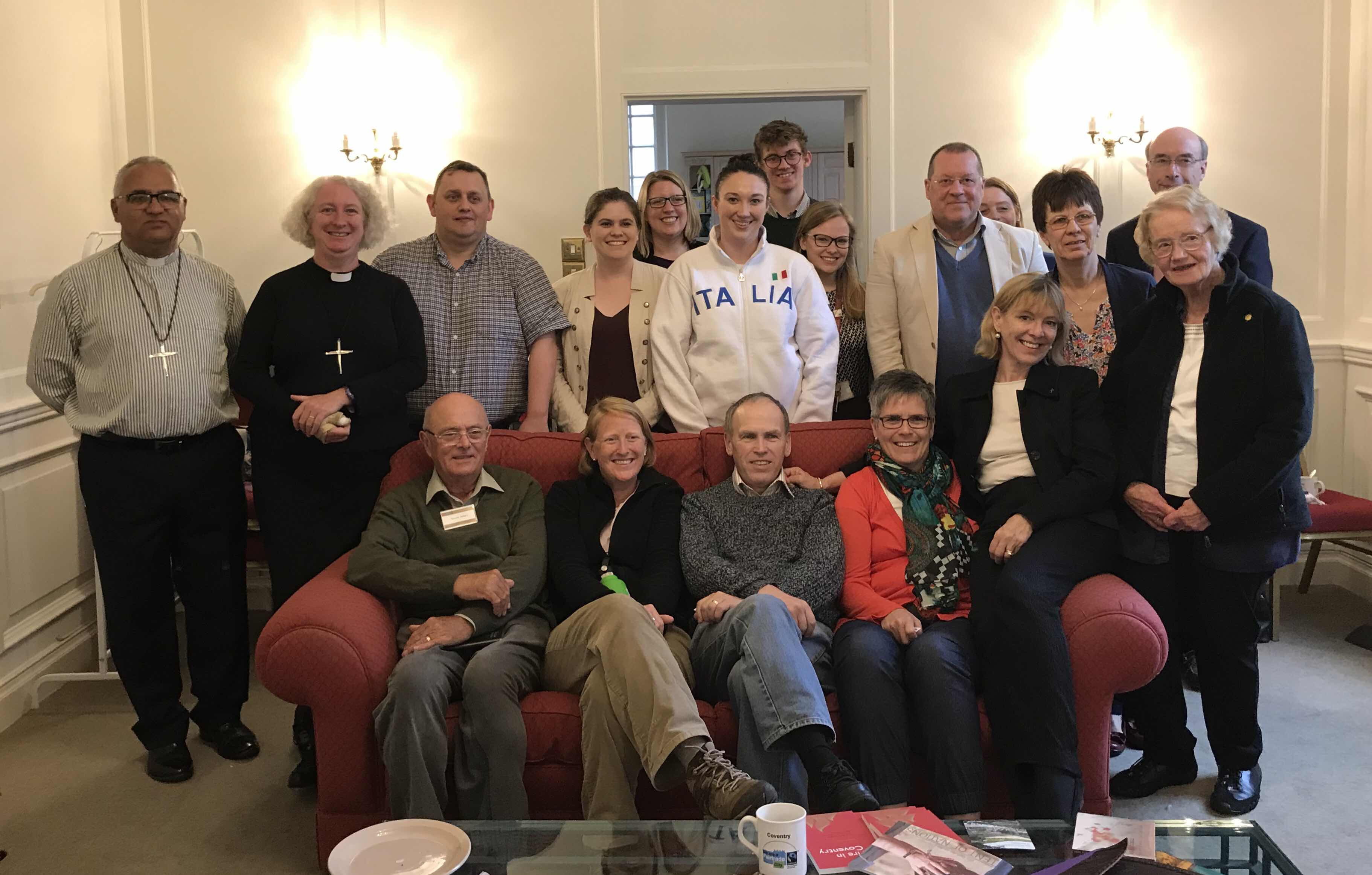
Our group of pilgrims was diverse, 2 from South Africa, 6 from Southampton, England, 3 from Liverpool, England, 1 from Belgium, 1 from London, and 2 from North American (me and a Canadian!). Our reconciliation ministry team was comprised of the Canon for Reconciliation, the program director and then three interns (1 American, 1 German, and 1 Brit)... we gathered and shared our stories, listened to where the reconciliation was needed and discerned our own paths. It was a prayerful week together full of sharing, laughter, and inspiration.
Many of you know that on my mother’s side there is a strong Norwegian lineage. With names like Signe, Astrid, Dagny, Trigva, and Sigrid, you do have to ask if you do not already know where these names comes from, we are very much Scandinavian!
So when i was wandering around Iona and finally found St Columba’s Bay, it was great fun to run into Norwegians and hear where they were from. The funny thing is that they kept apologizing to the Ionians. Iona, embraced Christianity when St Columba set up residency in the 6th century. And it’s the Vikings that kept coming and invading decimating the monks and the tiny island. (The Norwegians I met said, “Well, if you weren’t the first born son, you were getting nothing, you had to go and invade something to have land!”) What was remarkable is that the people of Iona accepted their kind apologies and said, “NO, if the Vikings hadn’t come the Romans would have kept invading, the Vikings helped us.”
Continuing along the way of St Cuthbert, it’s the monks from Iona who established Melrose Abbey where St Cuthbert entered the monastic life and his life ended in ministry on the isle of Lindisfarne. Lindisfarne is a unique island, where due to the coastal tides it is inaccessible 12 hours of the day and then passable only for 12, the waters come up and cover the walking path and road for 6 hours at a time! Lindisfarne was also a site of Viking invasions... and as I worshiped yesterday morning and waited to receive Eucharist i glanced to my left and there were three plaques commemorating the resolution of the Viking invasions. In 1993 they were commemorating the Viking invasions (the 1200th anniversary) and in the congregation were Norwegians who brought a letter from their bishop giving thanks for Christianity coming to Norway and seeking forgiveness for the pillaging the Vikings did on Lindisfarne. The framed handwritten note by Lindisfarne stated the conflict was now over.... reconciled. They were of the same body, same Lord through baptism and because of the persistence of the christians of the British Isles! This plaque was a send off surprise for me as we left the island and then headed to Durham where St. Cuthbert’s remains were transported..... due to more invasions!
St Cuthbert’s remains were taken from Lindisfarne due to Norman invasions, they traveled for 7 years until coming to rest in Durham Cathedral. And in the cathedral you can see Cuthbert’s resting place behind the high altar and the actual wooden coffin from 687! Apparently his coffin was well preserved and so it has lasted! It truly is amazing to see something so old and kept so faithfully, and added bonus our docent was very knowledgeable about the artifacts. Cuthbert’s cross, stole, and comb (gotta look good in the coffin!) were all included with his body in his coffin. As we were talking with our docent I shared that we had hiked and finally made it here to Durham (I said we did the final leg by train to Durham!) I shared about the Norwegians in Iona and she said, “OH, if the invasions had not occurred Durham cathedral would not exist!” You see because the relics of St. Cuthbert were moved around and finally laid to rest in Durham, King Henry VIII did not demolish Durham cathedral because of the relics when he took to smashing abbeys and monasteries (the cause of many of the ruins we saw on our route, communities could not recover and rebuild).
Often we dwell on the invasion, please understand I am not supporting violence, what these stories have done is to illuminatedto me what we do and how we move forward from that violence is important.
How do we shape our history, move towards reconciliation (if possible and preferably sooner than 1200 years!), and fight for others to prevent the same sort of violence to reoccur?
On the final part of my sabbatical i will be learning some Norwegian recipes....it’s fun how unexpected threads get woven into the fabric of our stories. These boots are still walking!
St Cuthbert’s way is 62 miles long, our final journey was 84 miles, not because we got lost but because we had to go off trail for lodging and we stopped along the way to see Abbeys, Castles, and landmarks of note.
But today, today we arrived on the Holy Island of Lindisfarne. We could see the Holy Island starting yesterday afternoon when we were 10 miles off, it is gorgeous and the castle and Abbey stand out and are highly visible. Our final 10 miles were joyfully downhill or flat!
The way of St Cuthbert begins in Melrose, Scotland where St Cuthbert grew up and was taught by monks from Iona who lived in the Melrose Abbey. The path follows along the different towns in and amongst the hills and valleys of the Scottish countryside and northeastern English country side. We learned St Cuthbert’s way is not always the shortest way to get to the next town but it was always beautiful to follow and see what lay just beyond the next ridge (there was always another ridge!)
Things we learned:
There is always going to be a hill (or “ascent” as our book called it) in the first 2 miles and it will get your heart going.
There is always going to be a hill in the last 2 miles because you are tired and would rather it be flat
Cuthbert meandered around to get to the sea. His way is not the shortest route.
We went 6 days without riding in a car, watching TV, or talking on the phone and it was delightful.
We had 6 days of SUNSHINE! (One day threatened rain but cleared up and I think most people got sunburned!)
Hiking poles are THE BEST (thanks Kermit for ours!)
Each person you encountered was a new adventure to learn about.
Afternoon tea makes the world a better place
This time of year is before the heavy rains, our trails were not overgrown or very muddy. We also were in and amongst 3 different groups. Hikers can hike in several ways, many companies will book your stay and take care of moving your luggage from one place to another. OR you can coordinate your own trip. We were amongst three other groups who all ended today at the Holy Island. Each of us had different companies who planned out our trip and one group did their own logistics. While we never started hiking out together on each day, we would find each other along the way. The group of 4 women hiking together, the group of three men hiking together, a couple and then Rob and me. Each day we would find each other on trail or at the end of trail. (Each town only had so many bed and breakfasts and restaurants.) While we didn’t learn everyone’s names it was fun to hear each other’s stories, give thanks for the small triumphs and be thankful all at the same time for each little blessing.
Today Rob and I saw each and every person we traveled with on the road. From what i understand this time of year is not peak season, so there were times where we heard no other humans, just birds or silence—- one foot after another. It was beautiful to see the topography change, the climate change, the flora change and to be able to have the opportunity to do such a hike.
Tomorrow we leave the Holy Island and continue a bit more of St Cuthbert- we will see him once more in Durham, where his remains were taken for safe keeping during the 11century invasions and have remained there ever since!